
TLDR: Balancing challenge and regulation is crucial in supporting your child’s development. By tuning in to their readiness, recognizing their need for breaks, and fostering a supportive environment, you help them build resilience and confidence while maintaining emotional well-being. The goal is not to push too hard or give up too quickly but to provide a steady, encouraging presence that guides them toward growth at their own pace.
5 Simple, Effective Heavy Work Activities for Your Child in School
As occupational therapist, we often emphasize the importance of heavy work for children in school. These activities involve resistance, deep pressure, and movement that help regulate energy levels, improve focus, and develop motor skills. For children who struggle with attention, sensory processing, or self-regulation, incorporating heavy work into their routine can make a meaningful difference. Here are five simple yet effective heavy work activities that can be seamlessly integrated into the school day.
1. Carrying and Moving Classroom Supplies
Encouraging your child to help transport books, chairs, or classroom materials can provide beneficial sensory input. Whether it’s stacking chairs, carrying a stack of notebooks to the teacher, or organizing supplies, these tasks engage core muscles and promote focus. Teachers can assign small responsibilities that involve lifting and carrying to give students the movement they need to stay engaged.
2. Desk Push-Ups or Chair Push-Downs
If your child struggles with sitting still, desk push-ups or chair push-downs are an easy way to incorporate heavy work without disrupting the class. By placing their hands on the desk and pushing their body upward or pressing down on the sides of their chair with both hands, they activate their arm and shoulder muscles. These simple exercises help children channel excess energy and improve attention during lessons.
3. Wall Push-Ups and Resistance Activities
Wall push-ups are another discreet way to engage muscles and provide deep pressure input. By standing a few inches away from the wall and slowly pushing against it, children activate their upper body while maintaining focus. Similarly, resistance bands or thera-putty can be used during seated activities to provide sensory input and promote self-regulation without distracting peers.
4. Pushing, Pulling, or Dragging Items
Encouraging children to engage in pushing or pulling activities helps activate their proprioceptive system, improving body awareness and coordination. Tasks such as pushing a wheeled cart of books, dragging weighted bags, or pulling chairs into place can be seamlessly built into classroom routines. These activities help children release pent-up energy while supporting muscle development.
5. Engaging in Playground Equipment Use
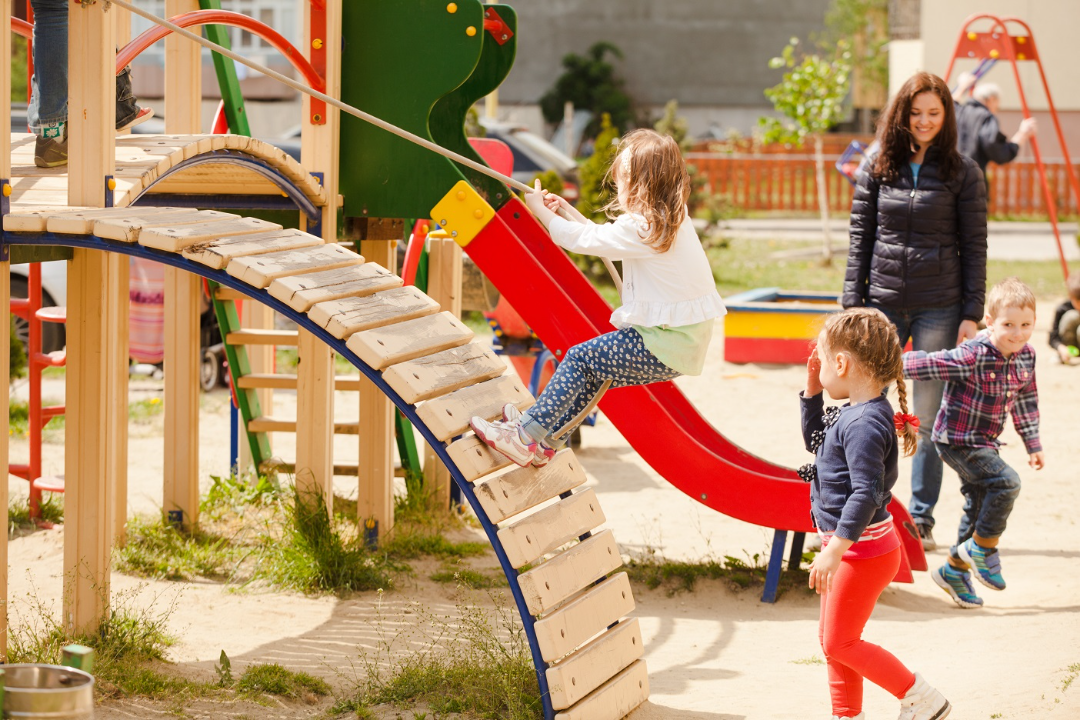
Recess is THE perfect time for children to engage in heavy work naturally. Activities like swinging, climbing, jumping, and crawling provide deep pressure input and help with self-regulation. Climbing on playground structures, swinging on monkey bars, or playing tug-of-war fosters strength, coordination, and attention skills—all essential for success in the classroom.
Final thoughts
Children who receive regular sensory input through heavy work activities are more likely to feel calm, focused, and ready to learn. These movements help regulate their nervous system, support motor planning, and enhance overall well-being. If you notice your child struggling with attention, behavior, or sensory sensitivities, incorporating these strategies may improve their school experience.
Discuss with your teachers on how to integrate these simple activities into their daily routine, and you can help set your child up for success—both physically and academically.
- Carrying Classroom Supplies
- Desk or Chair Push-Ups
- Wall Push-Ups & Resistance Tools
- Pushing, Pulling, Dragging Items
- Playground Activities